If you’ve ever looked at a pizza menu and wondered what makes a Grandma Pizza different from a Sicilian pizza, you’re not alone. Both are thicker, square or rectangular-style pizzas, but they’re not the same thing.
The biggest differences come down to the crust, preparation, texture, and overall style of the pizza.
At Naples Pizza in Barnegat, Grandma Pizza has its own distinct character, and understanding how it compares with Sicilian pizza can make ordering a lot easier when you’re deciding which one sounds right for you.
Quick Answer: Grandma Pizza vs. Sicilian Pizza
Grandma Pizza is thinner, more rustic, and typically has a crispier bottom, while Sicilian pizza has a thicker, more substantial crust with a soft, airy interior.
Both are traditionally baked in rectangular pans, but the dough and preparation create very different eating experiences.
| Grandma Pizza | Sicilian Pizza | |
|---|---|---|
| Crust | Thin and crisp | Thick and airy |
| Texture | Crisp underneath with a chewy center | Soft, fluffy, and substantial |
| Shape | Usually rectangular | Usually rectangular |
| Dough | Relatively thin | Much thicker |
| Overall feel | Rustic and light | Hearty and filling |
So which one should you order? It really depends on what kind of pizza you’re craving.
What Is Grandma Pizza?
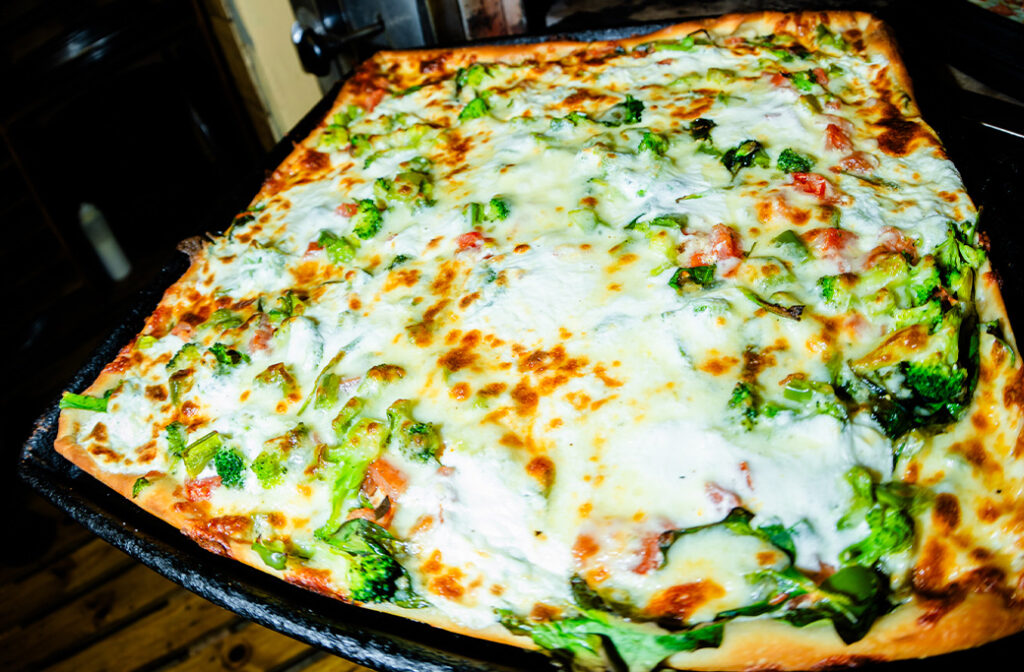
Grandma Pizza is a traditional Italian-American style known for its thin, rectangular crust and rustic preparation.
Unlike a traditional round pizza, Grandma Pizza is generally pressed or stretched into a rectangular pan and baked without the thick, airy structure associated with Sicilian pizza.
The result is a crust that’s relatively thin, but still has enough structure to support the sauce, cheese, and toppings.
One of the things that makes Grandma Pizza distinctive is its balance of textures. The bottom can develop a satisfying crispness while the inside retains some chew.
If you want the full explanation of the style and what makes Naples’ version different, see our article on what makes Grandma Pizza different.
What Is Sicilian Pizza?
Sicilian pizza takes the opposite approach to the crust.
It’s known for a thick, airy dough that’s baked in a generously oiled rectangular pan. The dough has room to rise, creating a substantial crust with a soft, pillowy interior.
Sicilian pizza is therefore much more substantial than Grandma Pizza. It’s the kind of pizza that can feel like a full meal even before you get to the toppings.
At Naples Pizza, the Sicilian selection also includes specialty combinations, giving customers a way to pair that thicker crust with flavors beyond a traditional cheese pizza.
How Naples Makes Its Grandma Pizza Dough

Our Grandma Pizza dough gets days of fermentation and a full day of proofing for a crunchy bottom and soft, light interior.
At Naples Pizza, our Grandma Pizza starts with an Italian flour blend featuring Caputo and Fibra flour. The dough spends a minimum of two days in our walk-in, giving it time to develop before we begin preparing the pizza.
When it’s time to make the Grandma Pizza, we stretch the dough into the pan with olive oil, then add oregano, Parmesan, and shredded mozzarella. From there, the dough proofs for the day before it is baked.
That proofing time matters. As the dough proofs, it develops the structure that helps create the texture Grandma Pizza is known for at Naples: a nice crunchy bottom with a soft interior. The result is a Grandma crust that’s crisp where it meets the pan but still light and soft inside. The extended dough process also contributes to a lighter, more easily digestible eating experience compared with dough that’s made and baked the same day.
How Naples Makes Its Sicilian Pizza Dough

Our Sicilian dough ferments for 2–3 days before baking for a crispy bottom and soft, pillowy interior.
Our Sicilian crust starts with a different Italian flour blend featuring Caputo and Fibra flour. Like our Grandma dough, the Sicilian dough isn’t made and baked the same day. After the dough is balled, it spends a minimum of two to three days in the refrigerator.
That extended fermentation time allows the dough to develop more flavor and contributes to the texture and overall eating experience. After the dough has had time to ferment, we bake the Sicilian shells before they are finished as pizzas. The result is a Sicilian crust with a crispy bottom, soft top, and soft, pillowy interior. That combination of textures is part of what makes Naples’ Sicilian pizza different from Sicilian dough that’s prepared and baked on the same day.
Why the Dough Process Matters
The difference between Grandma Pizza and Sicilian Pizza at Naples isn’t simply about one being thinner and one being thicker.
The Dough Process Matters
Both styles begin with Italian flour blends and spend multiple days developing before they reach the oven. That time contributes to flavor, texture, and the character of the finished crust.
For Grandma Pizza, the dough’s extended fermentation followed by a full day of proofing helps create the combination of a crunchy bottom and soft interior.
For Sicilian Pizza, the longer refrigerated fermentation and shell-baking process creates a crispy bottom with a soft, pillowy interior.
The result is two distinctly different pizza experiences, but neither relies on same-day dough.
Grandma vs. Sicilian: The Naples Difference
If you’re comparing the two styles at Naples Pizza, here’s the simplest way to think about them:
Grandma Pizza: Thin, light, crunchy on the bottom, and soft inside, with a rustic texture.
Sicilian Pizza: Thicker and more substantial, with a crispy bottom, soft top, and pillowy interior.
Behind both is a dough process that takes days, not hours.
That’s an important distinction. Many pizzas can be made from dough that’s mixed, shaped, and baked the same day. At Naples, we give our dough time to develop before it reaches the oven. That’s part of what gives both our Grandma and Sicilian pizzas their distinctive flavor, texture, and lighter eating experience.
Which One Is Crispier?
If crispiness is your priority, Grandma Pizza is generally the better choice. Its thinner dough allows more of the bottom to become crisp and browned during baking.
Sicilian pizza can certainly have a crisp exterior, particularly where the dough meets the oiled pan, but the interior remains much thicker and softer.
So, if your ideal pizza has a noticeable crunch underneath the toppings, Grandma is worth trying. If you prefer a soft, fluffy crust with a crisp edge, Sicilian may be the better fit.
Which One Is More Filling?
Sicilian Pizza wins this one.
That thicker layer of dough makes Sicilian pizza significantly more substantial. It’s a good choice when you’re looking for a hearty slice that feels more substantial than a traditional thin or Grandma-style pizza.
Grandma Pizza, on the other hand, gives you the satisfaction of a thicker-style pizza without the same amount of breadiness.
What About the Toppings?
Both styles can carry a wide variety of toppings, but the crust changes how those toppings experience.
On Grandma Pizza, the thinner base allows the sauce, cheese, and toppings to play a bigger role in each bite.
With Sicilian pizza, the crust is more prominent. You get a substantial combination of dough, sauce, cheese, and toppings in every bite.
That’s one reason some people strongly prefer one style over the other. It’s not necessarily about the toppings. It’s about the ratio of crust to everything else.
Grandma Pizza or Sicilian Pizza: Which Should You Try?
Here’s an easy way to decide:
Choose Grandma Pizza if you want:
-
- A thinner rectangular pizza
- A crispier crust
- A rustic texture
- More emphasis on sauce, cheese, and toppings
- Something different from a traditional round pie without going extremely thick
Choose Sicilian Pizza if you want:
-
- A thick, substantial crust
- A soft and airy interior
- A more filling slice
- Plenty of bread-like texture
- A hearty alternative to traditional round pizza
If you still can’t decide, that’s exactly what trying both is for.
Try Both Styles at Naples Pizza
Grandma and Sicilian pizza offer two completely different ways to enjoy a square pie, and both are worth trying.
At Naples Pizza in Barnegat, our Grandma Pizza starts with dough that’s fermented for days and proofed before baking for a crunchy bottom and soft, light interior. Our Sicilian dough also gets a long fermentation, creating a crispy bottom and soft, pillowy center.
So why choose?
Order Grandma when you want crisp and light. Choose Sicilian when you’re craving thick and hearty. Better yet, try both and decide which one is your favorite.
Whether you’re joining us from Barnegat, Toms River, Manahawkin, or elsewhere in Ocean County, come taste the difference that a little more time, and a lot of care, makes.